Journal
Inherited Hair Rituals: Which Traditions Still Serve Us—and Which Deserve a Second Look?
Dr. Bre Hayward
September 9, 2026 · 7 min read · Updated September 9, 2026

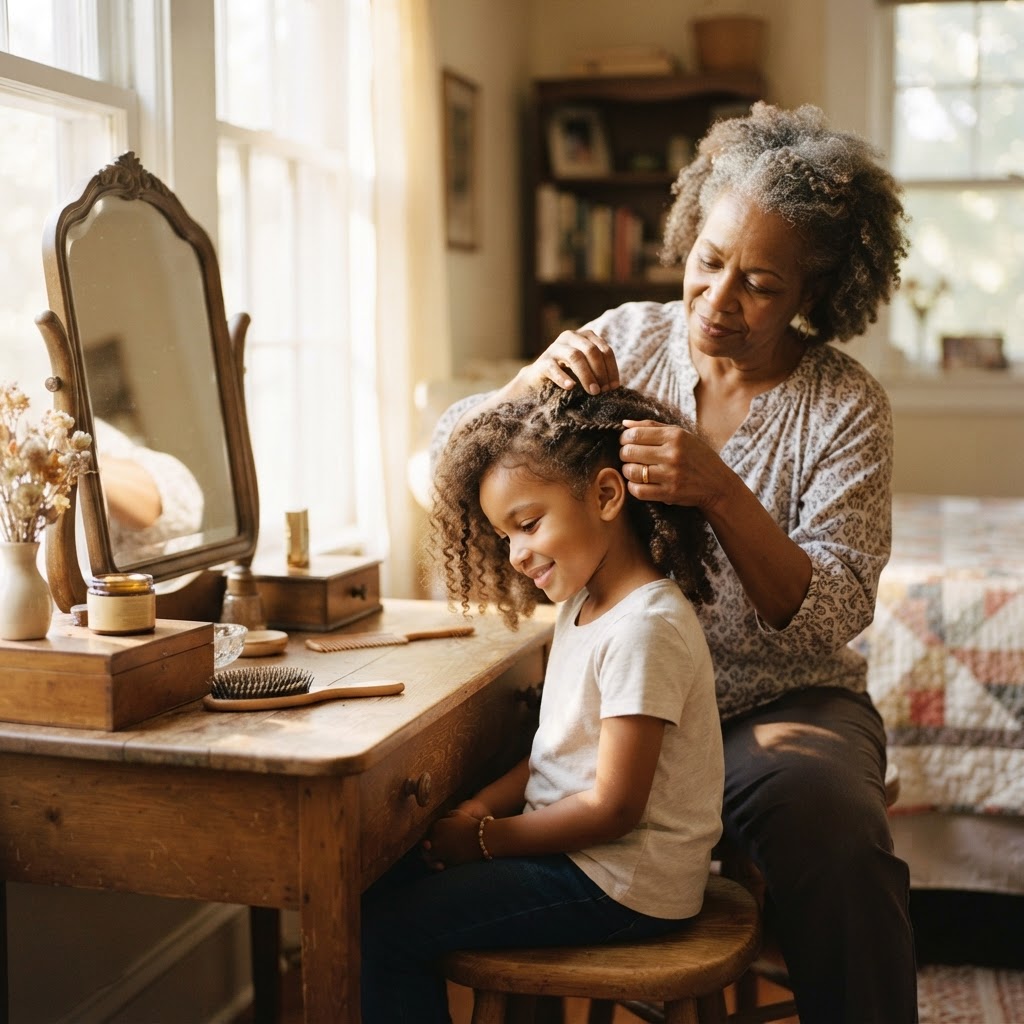
Before you chose your hair products, someone chose them for you. The rituals you grew up with — hot oil treatments, Sunday wash days, braiding sessions — were not just routines. They were inheritance.
Traditions Are Not the Problem
There is a tendency, when introducing science into a conversation about cultural hair practices, to frame tradition as the thing to be corrected. That framing is wrong, and it does damage. Many inherited rituals are rooted in real observation and real care. Hot oiling addressed dryness long before anyone measured sebum travel. Protective styling reduced manipulation long before anyone named it.
These traditions deserve to be honored, not pathologized.
What Deserves a Second Look
Honoring tradition is not the same as never questioning it. Some practices made sense in the conditions they were created in — different water, different products, different information — and deserve a fresh look with what we know now. A ritual of aggressive daily brushing, or of leaving styles in until the scalp protests, may have outlived its usefulness even if it carries emotional weight.
The question is not whether a tradition is old or new. It is whether it still serves the hair and the scalp it's applied to.
Hair traditions are inherited. Hair science usually isn't. The work is to keep both — the ones that serve us, and the understanding to know which is which.
How to Decide
Notice the outcome of a ritual, not just its familiarity. Does the scalp feel balanced, or does it feel tight, itchy, or sore? Does the hair feel hydrated and resilient, or thinning at the edges and snapping under tension? A tradition that once served well may need a small adjustment — gentler installation, less frequency, a sulfate-free cleanser — to keep serving well in new conditions.
The Generational Opportunity
Each generation has the chance to do something previous generations couldn't: preserve the rituals that work, update the ones that don't, and pass both — the tradition and the understanding — forward together. That is generational wellness in practice.
Frequently Asked Questions
Are traditional hair practices bad for your hair?
No. Many traditional hair rituals — hot oiling, protective styling, careful detangling — are rooted in real observation and real care. The goal is to honor useful traditions while revisiting practices that may need adjustment for today's products, water, and information.
How do I know which hair traditions to keep?
Notice the outcome. If a ritual leaves your scalp balanced and your hair resilient, keep it. If it causes tightness, soreness, breakage, or thinning at the edges, it may deserve a gentler adjustment rather than abandonment.
What is the difference between a hair tradition and a hair habit?
A tradition is inherited — passed down through family and culture. A habit is personal — what you actually do day to day. Traditions shape habits; updating a tradition is a chance to improve the habits that follow from it.
How does this connect to generational wellness?
Generational wellness is the practice of improving the knowledge and behaviors we pass forward. Revisiting inherited hair rituals — keeping what serves the hair, updating what doesn't — is a concrete example of it.
Share this article
Dr. Bre Hayward
Phase Theory Beauty Co.
Shop the Science
Products formulated with the actives featured in this article.