Journal
Founder Perspective
Systems Thinking, Scalp-First Beauty & Building Phase Theory
What nearly two decades in healthcare leadership, organizational research, and a decade of beauty entrepreneurship taught me about designing systems around people who are too often treated as an afterthought.
October 1, 2026 · 10 min read

I have spent much of my career thinking about systems.
In healthcare, systems determine whether information reaches the right person, whether a process works as intended, whether something gets measured, and ultimately whether the people depending on that system receive what they need.
In organizational leadership, I became interested in a different kind of system: the structures that determine who advances, who receives sponsorship, whose experiences are recognized, and who remains underrepresented at the highest levels of leadership.
And for more than a decade, while continuing my career in healthcare, I have been building in beauty.
At first glance, those worlds may seem unrelated.
To me, they aren't.
The common thread is a question I have learned to ask repeatedly:
Who was this system actually designed around?
The Problem Is Often Upstream
When something repeatedly fails downstream, my instinct is to look upstream.
That comes naturally after years in healthcare operations. A recurring problem is rarely solved permanently by addressing the final symptom. You examine the workflow. You look at the inputs. You identify where information was lost, where assumptions were made, where accountability changed hands, and where the design itself created the outcome.
I eventually realized I approached beauty the same way.
Consumers are accustomed to thinking about hair from the strand outward. Is it dry? Is it breaking? Is it shedding? Why isn't it retaining length? What product should I put on it?
Those are reasonable questions.
But I became increasingly interested in what sits upstream of the strand.
The scalp. The follicle. The hair-growth cycle. The environment from which the visible hair emerges.
That thinking became foundational to what we now describe at Phase Theory Beauty as a scalp-first approach to haircare.
It doesn't mean the hair strand doesn't matter. Of course it does.
It means I became less interested in treating the visible outcome as though it exists independently of the system producing it.
Before Phase Theory, There Was Baby Hair®
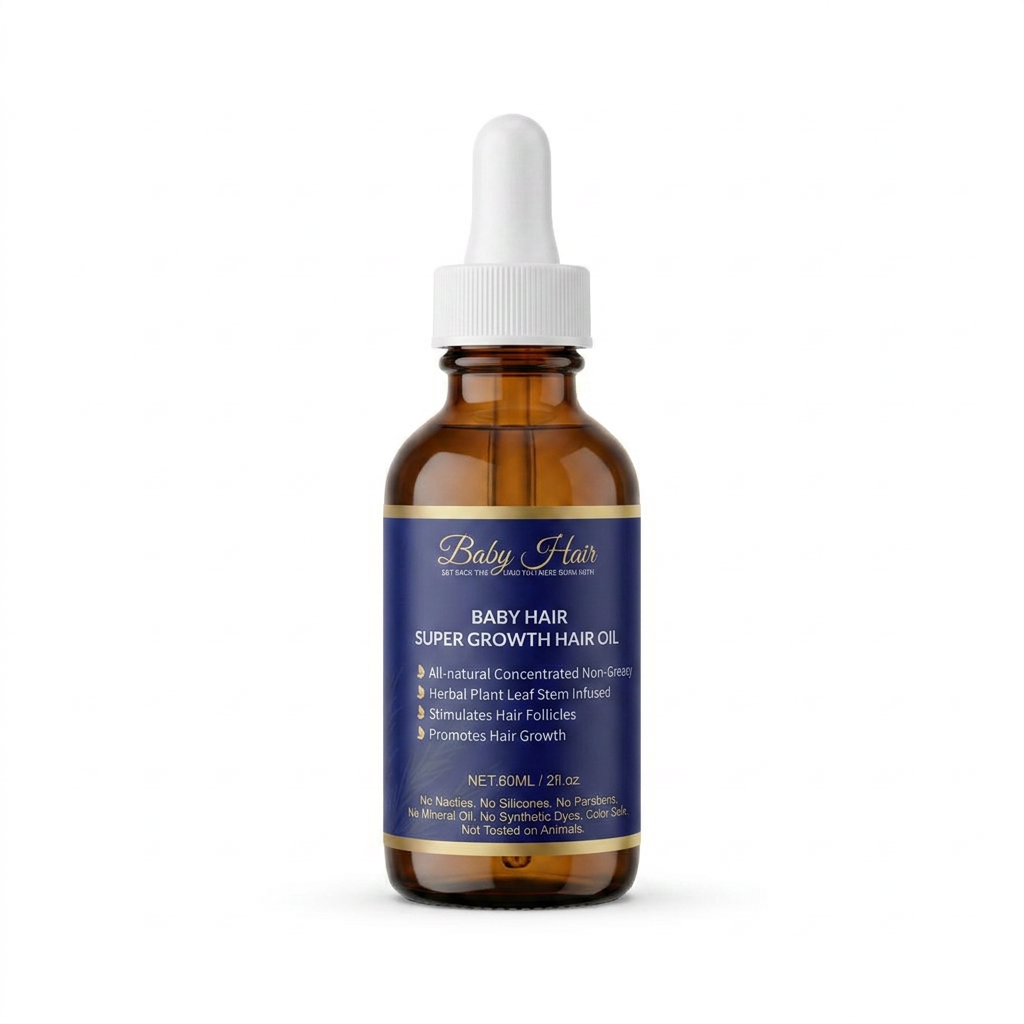
Baby Hair® began as a brand concept in 2015.
Over the years, building the brand while simultaneously working in healthcare leadership gave me an unusual vantage point. During the day, I could be thinking about operations, data, process design, accountability, and organizational performance. In another part of my life, I was thinking about formulations, consumers, hair behaviors, ingredients, scalp needs, manufacturing, retail, and what people were telling us they couldn't find.
I didn't leave one world for the other.
They developed alongside each other.
And eventually, the questions I was asking through Baby Hair® became larger than a single product line. Why do we formulate this way? What is happening beneath the visible strand? How does hair change across different stages of life? Why might the needs of a child's scalp differ from those of an adult? What happens during postpartum changes or menopause? How should consumers understand ingredients beyond the marketing language printed on a bottle?
And perhaps most importantly:
How do we give people enough information to understand their hair — not simply enough information to buy something?
Those questions helped lead to Phase Theory Beauty Company.
From Products to a Framework
Phase Theory wasn't created because I wanted another beauty label.
It developed because the questions had outgrown the original container.
I wanted room to think about hair and scalp care as an interconnected system: scalp environment, follicle, growth cycle, strand, ingredients, behavior, life stage, and routine.
That requires more than products.
It requires education.
It requires asking why.
It requires being willing to tell a consumer that every hair concern does not have a cosmetic solution — and that persistent or unusual scalp and hair changes may belong in a conversation with a qualified professional rather than in a shopping cart.
That distinction matters to me.
Beauty companies should be able to educate without pretending to diagnose.
We should be able to discuss the science relevant to cosmetic haircare without pretending cosmetics are medicine.
And we should be able to formulate thoughtfully without turning every botanical ingredient into a miracle claim.
For me, credibility is not created by making the biggest claim.
Sometimes it is created by knowing where the claim should stop.
Designing Beyond the "Default" Consumer
My doctoral research examined the underrepresentation of Black women in executive leadership roles.
That work belongs to organizational leadership — not cosmetic science — and I think maintaining that distinction is important.
But research changes the questions you carry with you.
Studying leadership structures made me think even more deeply about defaults: who organizations historically design around, whose experiences become normalized, and what happens to people whose needs sit outside that assumed center.
I recognize versions of that question in beauty.
For generations, consumers with textured hair have developed extraordinary knowledge, practices, techniques, language, and traditions around caring for their hair.
The beauty industry did not invent that expertise.
What companies can do is listen more carefully, formulate more intentionally, test assumptions, broaden who is considered during development, and resist treating inclusion as a shade added at the end of an otherwise completed strategy.
For Phase Theory, "multicultural" cannot simply mean putting different faces in campaign photography.
It has to influence how we think.
Who might use this? What textures are we considering? What routines are realistic? What life stages change the equation? What does the consumer already know that the company needs to respect?
Those are design questions.
And good systems begin with good questions.
Why "Scalp-First" Matters to Me
Scalp-first is not meant to be complicated.
It is a way of changing the starting point.
Hair does not begin at the ends.
Every visible strand emerged from a follicle within the scalp. The condition of the strand once it emerges is affected by many things — genetics, grooming practices, chemical processing, heat, friction, environment, routine, age, and other factors.
Cosmetic haircare cannot control all of those things.
But we can formulate and educate with the whole system in mind.
That's why Phase Theory's educational work extends beyond individual products into hair-growth science, follicle education, ingredient literacy, life-stage hair changes, and practical scalp and haircare.
I want someone to be able to encounter Phase Theory, learn something useful, and leave without purchasing anything.
That might sound unusual coming from a founder.
I don't think it is.
If education makes someone a more informed consumer — even if today's answer isn't one of our products — we've strengthened the relationship.
Trust compounds.
Building the Infrastructure Behind the Idea
Another lesson healthcare taught me is that a good idea and a functioning system are two very different things.
A brand can have beautiful packaging, compelling marketing, and an interesting formulation.
But companies are ultimately built through infrastructure.
Can you manufacture consistently? Can you maintain quality? Can you understand your data? Can you fulfill what you promise? Can you build processes that still work when volume increases? Can you identify when something isn't working and change it? Can the organization grow without losing the principles that made it worth building?
Those questions aren't glamorous.
They're also some of my favorite questions.
Because the long-term ambition for Phase Theory isn't simply to sell more bottles.
It is to build an organization capable of supporting brands, research, education, formulation development, and new ideas without losing rigor as it grows.
The Intersection Is the Point
For a long time, professional identities were expected to fit neatly into boxes.
Healthcare executive. Researcher. Entrepreneur. Beauty founder.
Pick one.
I don't see them that way anymore.
Healthcare taught me to examine systems.
Leadership research taught me to interrogate structures and assumptions.
Entrepreneurship taught me to build when the infrastructure I wanted did not yet exist.
Beauty gave me a place to apply that thinking to something deeply personal, cultural, scientific, creative, and human.
Phase Theory sits at that intersection.
Not because healthcare and haircare are the same.
They aren't.
Not because organizational research proves anything about cosmetic formulation.
It doesn't.
They belong together in my story because each discipline changed the kinds of questions I learned to ask.
And increasingly, I believe the quality of what we build depends on the quality of those questions.
Who was this designed for? Who wasn't considered? What is happening upstream? What does the evidence actually support? Where should our claim stop? And if the existing system doesn't adequately serve the people standing in front of us, what would it look like to design a better one?
Those are questions I carried through healthcare.
They followed me into research.
They shaped how I built Baby Hair®.
And today, they continue to shape Phase Theory.
Share this article
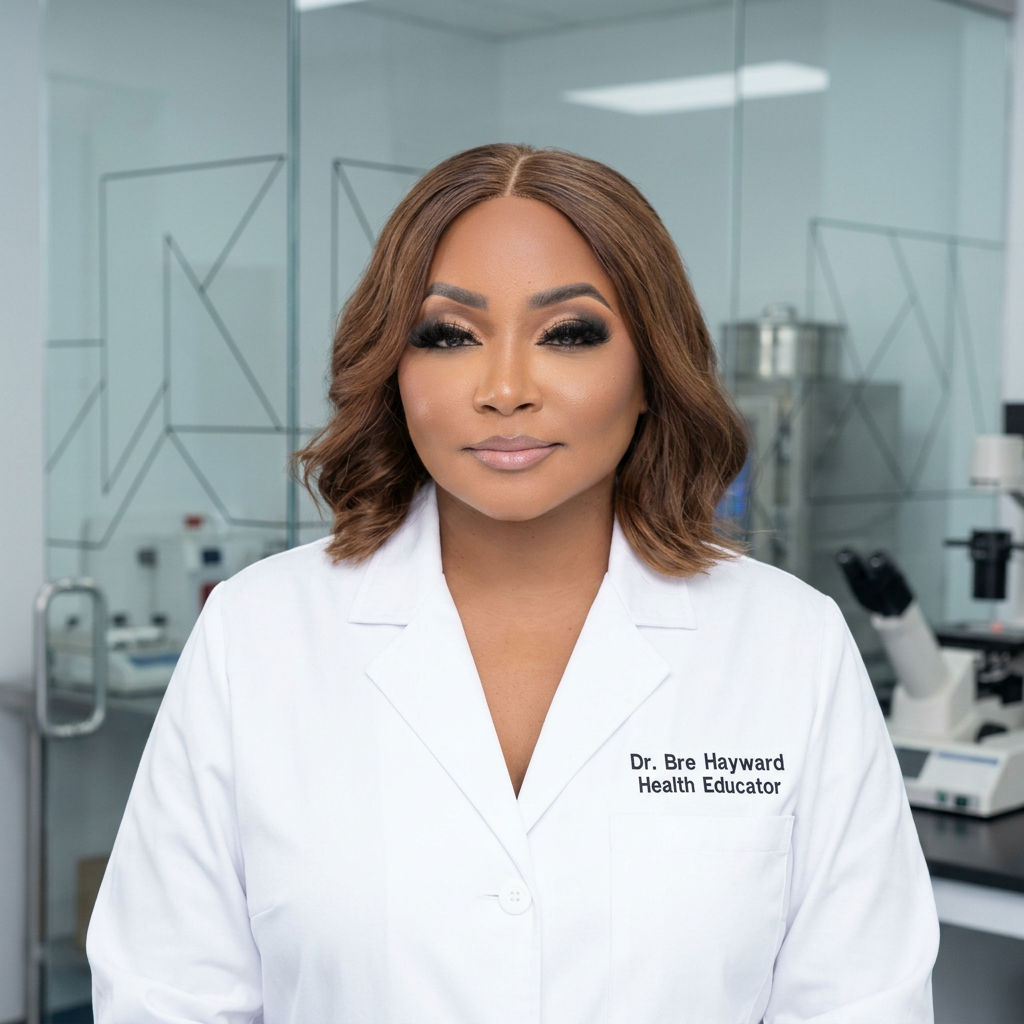
Founder & CEO, Phase Theory Beauty Company · Founder, Baby Hair® · Houston, Texas
Read her full profile →Shop the Science
Products formulated with the actives featured in this article.