Journal
Chronic Scalp Inflammation and Hair Thinning: What Research Does — and Doesn't — Support
Phase Theory Research
February 14, 2026 · 8 min read · Updated October 1, 2026
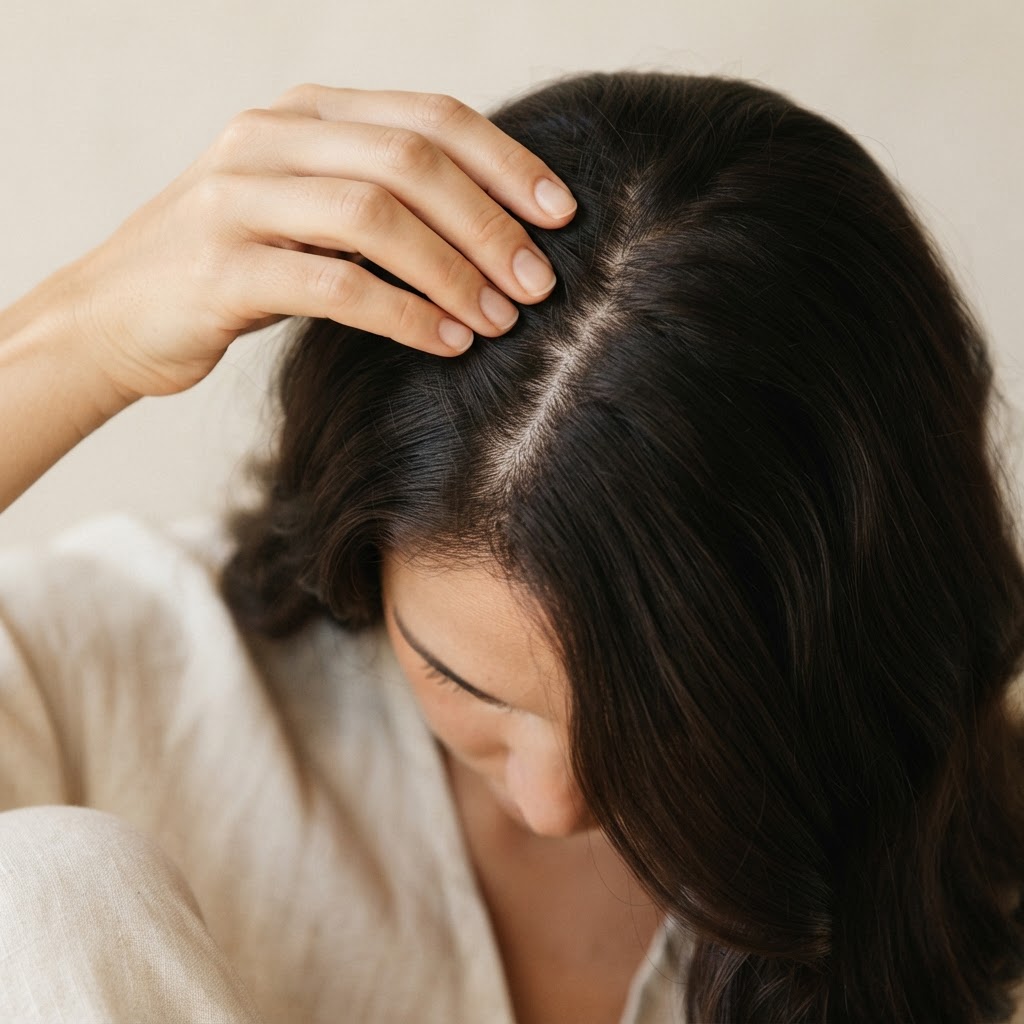
If you've read that hidden scalp inflammation is the real cause of most hair thinning, you've met a real hypothesis wearing a much stronger headline than the evidence justifies. Inflammation genuinely matters in hair biology — but what it means for your hair is more specific, more interesting, and more actionable than the slogan suggests.
Where Inflammation Actually Appears in Hair Research
Inflammation is a documented feature of several hair and scalp conditions. Research on androgenetic alopecia — the common hereditary pattern of thinning — has found low-level inflammation around miniaturizing follicles. Alopecia areata is driven by an autoimmune attack on follicles. And a family of conditions called cicatricial, or scarring, alopecias involves inflammatory destruction of follicles, which is why they need prompt medical care.
One of the most cited findings came from a 2012 study by Garza and colleagues published in Science Translational Medicine. Samples of bald scalp from men with androgenetic alopecia contained substantially elevated levels of prostaglandin D2 (PGD2) — reported at roughly three times the concentration found in haired scalp — and PGD2 inhibited hair growth in the study's mouse models. It was an important clue that signaling molecules associated with inflammation travel alongside pattern hair loss.
What That Research Doesn't Say
It doesn't say inflammation causes most thinning, or that it's one unifying explanation for hair loss. Hereditary sensitivity to DHT, genetics, hormonal shifts, nutrition, illness, stress, and certain medications all shape hair — and their relative weight varies from person to person. Nor does the research establish that lowering PGD2, or "reducing inflammation" with cosmetic products, will regrow hair. That causal step has not been demonstrated in humans.
Inflammation is a character in the story of several hair conditions. It is not proven to be the author.
Your Shampoo Isn't Automatically the Problem
A popular claim holds that sulfate surfactants trigger a low-grade inflammatory cycle with every wash, quietly thinning hair over years. For ordinary, healthy scalps, that chain of events isn't supported — routine cleansing doesn't add up to chronic inflammation. That doesn't mean shampoos can never contribute to irritation: irritant and allergic contact reactions to particular ingredients are well documented in dermatology, and sulfates can feel stripping and uncomfortable for dry, curly, or low-density hair. The honest position sits in between. Your shampoo isn't automatically the problem — but a product that repeatedly leaves your scalp red, itching, or burning is a reaction worth taking seriously, and switching is the reasonable first step.
Our sulfate-free formulations exist because a comfortable, non-stripped scalp is the right environment for cosmetic support of hair — not because avoiding sulfates is a medical treatment for inflammation. Keeping that distinction honest is part of how we write about science.
What Cosmetic Care Can — and Can't — Do
Cosmetic scalp care can do real things: cleanse gently, help maintain the skin's moisture barrier, avoid irritation you can feel, and support the environment healthy follicles sit in. What cosmetics cannot do is treat inflammatory scalp disease. Seborrheic dermatitis, scalp psoriasis, folliculitis, and scarring alopecias are medical conditions — they respond to diagnosis and, often, prescription treatment, not to any shampoo.
When to See a Professional
Book a dermatology or clinical appointment if you notice persistent redness, itching, pain, scaling, bumps or pustules, visible scarring, patchy loss, or shedding that comes on rapidly. Those signs describe conditions that need a diagnosis — and early evaluation matters, especially for the scarring forms of hair loss, where follicles can be permanently lost while waiting.
If your scalp is simply dry, tight, or easily irritated, gentler cleansing and barrier-supporting products are a sensible first step. If irritation persists beyond a couple of weeks, that's a scalp asking for a professional look.
Frequently Asked Questions
Can scalp inflammation cause hair loss?
Yes — in specific, diagnosable conditions. Inflammation is involved in alopecia areata, scarring alopecias, seborrheic dermatitis, and appears around miniaturizing follicles in pattern hair loss research. What research doesn't support is the idea that silent, undetectable inflammation is the cause of most thinning in healthy scalps.
Can a shampoo reduce inflammation and regrow hair?
A cosmetic shampoo cannot treat inflammatory scalp disease or regrow hair. Gentle, non-stripping products can reduce irritation you can feel and support a comfortable scalp environment — which is a worthwhile goal on its own. Medicated shampoos for conditions like seborrheic dermatitis are a different category and typically involve active drug ingredients, sometimes prescription.
What is PGD2, and should I care?
Prostaglandin D2 is a signaling molecule. A notable 2012 study found it elevated — roughly three-fold — in bald scalp samples from men with pattern hair loss, and it inhibited hair growth in mouse models. It remains a research direction, not something a consumer product can meaningfully target today.
How do I know if my scalp is inflamed?
You can't self-diagnose invisible inflammation — and you shouldn't have to. The signs that matter are visible and feelable: persistent redness, itching, flaking, pain, bumps, or rapid shedding. Those warrant a professional evaluation rather than a guess.
References & Further Reading
Garza LA, et al. "Prostaglandin D2 inhibits hair growth and is elevated in bald scalp of men with androgenetic alopecia." Science Translational Medicine. 2012;4(126):126ra34.
Share this article
Phase Theory Research
Phase Theory Beauty Co.
Shop the Science
Products formulated with the actives featured in this article.