Journal
Why Your Scalp Gets Oily but Your Hair Still Feels Dry
Dr. Bre Hayward
April 8, 2026 · 6 min read · Updated April 8, 2026
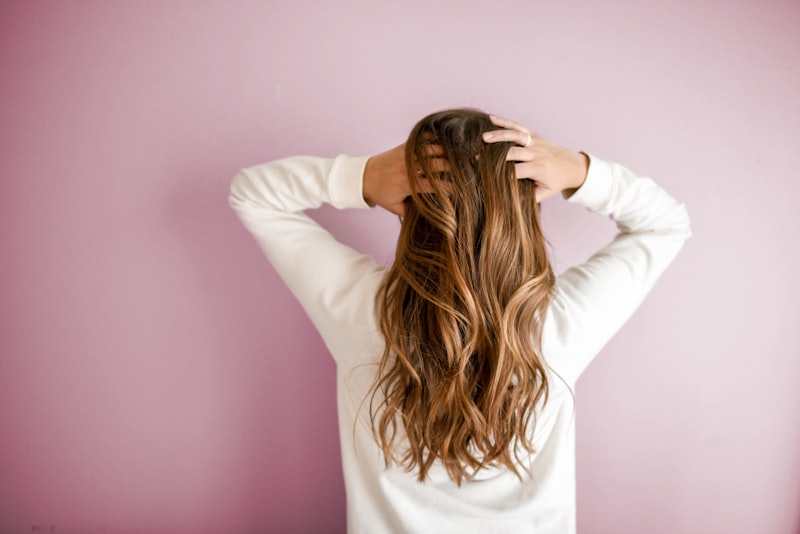
You can have an oily scalp and dry, brittle lengths at the same time — and if you do, you are far from alone.
The two feelings seem contradictory. If your scalp is producing oil, shouldn't your hair be moisturized? The confusion comes from treating oil and moisture as the same thing. They are not.
Oil and Moisture Are Not the Same Thing
Your scalp produces sebum, a natural oil that conditions and protects the skin and the hair near the root. Moisture, in hair terms, is water — the hydration held inside the hair fiber and sealed in by oils. Sebum and water serve different roles, and one does not guarantee the other.
Sebum is designed to travel down the hair shaft, coating each strand. On straight hair it slides down quickly, which is why straight hair often looks oily faster. On wavy, curly, and coily hair, sebum has to navigate a winding path, so it rarely reaches the lengths. The result: an oily scalp and dry ends can coexist on the exact same head.
Why Over-Washing Makes Both Worse
The most common response to an oily scalp is to wash more often, and more aggressively. Harsh, sulfate-heavy shampoos strip the scalp's protective lipid layer. The scalp registers this as dryness and stress, and responds by producing more sebum — a rebound effect. Meanwhile, the lengths, already low on moisture, get stripped a little more with every wash.
So the cycle deepens: oilier roots, drier ends, more washing, more stripping.
What Actually Helps
A scalp-first approach separates the two problems. Cleanse the scalp gently with a sulfate-free formula that respects your acid mantle, and wash only as often as your scalp truly needs. Condition the lengths separately, focusing hydration where the hair is driest — usually the oldest, most weathered ends.
An oily scalp and dry hair are not opposites. They are two different problems happening on the same head — and they need two different answers.
Over time, a balanced scalp produces less rebound oil, and well-hydrated lengths stop feeling straw-like. The goal is not to eliminate oil. It is to let the scalp regulate itself, and to give the hair the moisture that oil alone cannot always deliver.
Frequently Asked Questions
Can you have an oily scalp and dry hair at the same time?
Yes. Scalp oil (sebum) and hair moisture (water) are different things. Sebum often does not reach the lengths of wavy, curly, or coily hair, so the scalp can feel oily while the ends stay dry.
Why does my scalp get oily but my hair stays dry?
Common causes include over-washing with harsh shampoos that strip the scalp and trigger rebound oil, heat styling, hard water, and the natural difficulty sebum has traveling down textured hair. The two problems need separate care.
How do I treat an oily scalp and dry hair together?
Cleanse the scalp gently with a sulfate-free shampoo only as often as needed, condition the lengths separately, and avoid over-washing. A scalp-first routine helps the scalp regulate its own oil while you hydrate the lengths directly.
Does washing more often help an oily scalp?
Usually the opposite. Frequent washing with stripping shampoos removes the scalp's protective oils, prompting it to produce more sebum. Washing less often with a gentle formula often reduces oiliness over time.
Share this article
Dr. Bre Hayward
Phase Theory Beauty Co.
Shop the Science
Products formulated with the actives featured in this article.