Journal
Children's Scalp Care 101: What to Look For and How to Keep Their Scalp Healthy
Dr. Bre Hayward
October 4, 2026 · 7 min read · Updated October 4, 2026
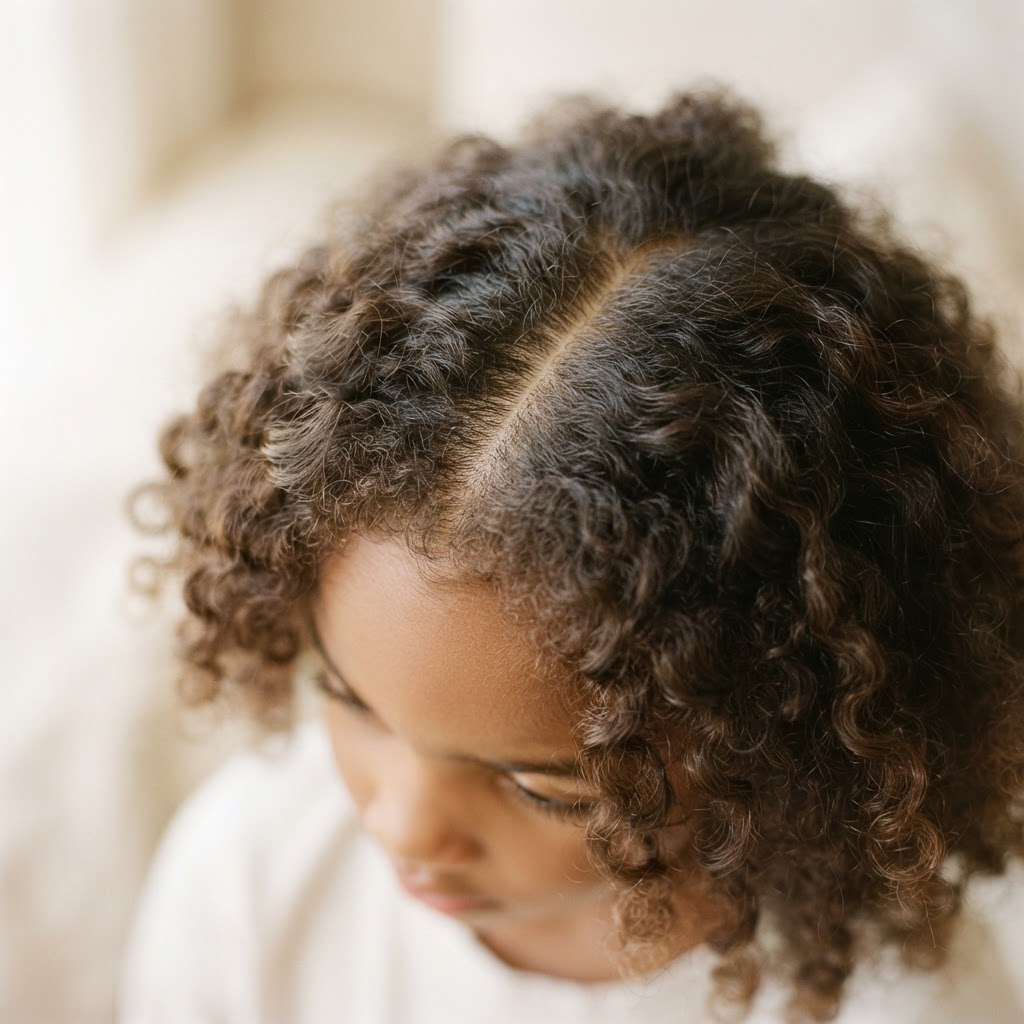
Healthy hair on a child is a scalp story before it is a strand story. And the scalp asks very little of a parent: a couple of minutes of looking, a few times a month.
Because a child's scalp rarely complains in words, small changes are easy to miss — and most scalp concerns are easiest to address when they are noticed early. Here is how to build a simple check into the routine you are already doing, what is normal, and what deserves a pediatrician's eyes rather than a shampoo swap.
Get to Know Their Normal
Once a month — during a wash day is easiest — spend two unhurried minutes looking at the scalp itself, section by small section, under good light. Look at the skin, not the hair: the color, the texture, whether anything flakes, and how it compares to last month. A few dry flakes here and there, seasonal dryness in winter, and changes in hair texture as a child grows are all within a wide range of normal. The purpose of the check is not to find problems. It is to know their baseline well enough that a change announces itself.
What Irritation Looks Like on Every Skin Tone
Irritation does not look the same on every child. On lighter skin tones, inflammation reads as pink or red. On richer, deeper skin tones, the same inflammation more often presents as violet, ashen-gray, or simply darker patches — which is why irritation on children with deep skin tones is under-recognized, including by the children themselves. Flaking, dullness, or a child scratching without realizing are also signals. Knowing that discoloration — not redness — is how irritation usually shows on deeper skin makes the monthly check genuinely useful for every child.
Buildup Is Not a Condition
Not everything that flakes is a problem. Product, lint, and shed skin can collect near the roots and look like dandruff, especially on coily textures where the scalp is checked less often. Buildup sits on and around the hair near the root, lifts with a gentle, thorough cleanse, and stays gone. A genuine scalp condition clings to the skin itself and returns quickly no matter how the hair is washed. One clarifying-style gentle cleanse — then a re-check a week later — usually tells the two apart.
What Belongs With a Pediatrician
Some things should not be treated with cosmetic products at all. Make an appointment if the scalp shows persistent patches of discoloration or rough, scaly skin; crusting or oozing; ring-shaped or scaly patches, especially with hairs that break off at the surface — a classic sign of ringworm of the scalp (tinea capitis), a fungal infection that requires prescription treatment; any patch where hair is visibly thinning or falling; or intense itching that disturbs sleep or play. Infant cradle cap usually settles on its own, but spreading redness or irritation deserves a visit. These signs are common, treatable, and much easier to resolve early — a pediatrician can diagnose them in minutes in a way no product label can.
Everyday Care That Adds Up
Between checks, the habits that keep a child's scalp healthy are refreshingly small: cleanse gently with a mild formula when the scalp actually needs it, using fingertips rather than nails; keep the scalp comfortable and moisturized when it runs dry; protect exposed part lines from sun with hats, since scalp skin burns like any other skin; and give the scalp breathing room between protective styles — the same styles that protect ends can be worn too tight or too long if the scalp never gets a rest day. None of this needs to be elaborate. It needs to be consistent.
One honest note: cosmetic hair care keeps a healthy scalp comfortable and clean — it does not treat infections or medical scalp conditions. When something beyond the normal appears, the pediatrician is the right first stop, and everything in this article simply helps you get there earlier.
Two minutes of looking, once a month, catches nearly everything early — and turns a child's scalp from an afterthought into something you actually know.
Frequently Asked Questions
How often should I check my child's scalp?
About once a month, during a wash day, spend two minutes looking at the scalp section by section in good light. The goal is to learn their normal so changes are noticed early — not to find problems.
What does scalp irritation look like on dark skin?
On deeper skin tones, inflammation usually shows as violet, ashen-gray, or darker patches rather than the pink or red seen on lighter skin. Flaking, dullness, and unconscious scratching are also signs worth attention.
Is flaking on my child's scalp dandruff?
Often it is simply product, lint, or dry skin buildup near the roots, which lifts with a gentle thorough cleanse and stays gone. A genuine condition clings to the skin and returns quickly after washing — if flaking persists after a week or comes with redness, scaling, or hair breakage, see a pediatrician.
When does my child's scalp need a doctor?
See a pediatrician for persistent discoloration or scaly patches, crusting or oozing, ring-shaped patches with broken hairs (a sign of tinea capitis, a fungal infection needing prescription treatment), visible hair loss patches, or itching that disturbs sleep. Cosmetic products do not treat these — early diagnosis does.
Share this article
Dr. Bre Hayward
Phase Theory Beauty Co.
Shop the Science
Products formulated with the actives featured in this article.