Lesson 2.2
Moisture Balance: Hydration Inside and Out
Written by Dr. Bre Hayward
Learning Objective
Understand how the scalp stays hydrated, recognize the signs of a thirsty scalp, and keep moisture balanced without causing buildup.
🎙️ Listen to this lesson
Narrated in a natural voice · prepared the first time you play
How Scalp Skin Stays Hydrated
Scalp hydration has two parts: the water your body delivers from within, and the barrier — sebum chief among it — that slows how fast that water evaporates. Humidity, heat styling and dry indoor air all pull moisture out of the equation, which is why the same routine can feel perfect in one season and tight in another.
Signs of a Thirsty Scalp
A scalp short on moisture feels tight, looks dull and produces those fine white flakes from the last lesson. The fixes are unglamorous and effective: drink water, cleanse gently rather than harshly, and use light, water-based moisture — a hydrating leave-in, a scalp-friendly oil in thin amounts — rather than heavy products.
Over-Moisturizing Is a Thing Too
Heavy butters and thick products applied directly to the scalp can sit on the skin, contribute to buildup and leave hair limp. Moisture for the scalp should be light; richness belongs on the lengths and ends, where the fiber needs it most. Match the product weight to where you're putting it.
Key Takeaways
Hydration comes from within, protected by the barrier outside
A thirsty scalp feels tight, dull and produces fine white flakes
Heavy products on the scalp cause buildup — save richness for lengths
Water-based moisture first; light sealing second
Why This Matters
Moisture balance is the difference between a scalp that quietly supports your routine and one that competes with it. Get it right and almost everything else gets easier.
Visual Guide · The Scalp Up Close
Magnified research photography of six scalp appearances. Hover or tap any image to reveal the biology underneath.
For cosmetic-science education only — not a diagnostic tool.
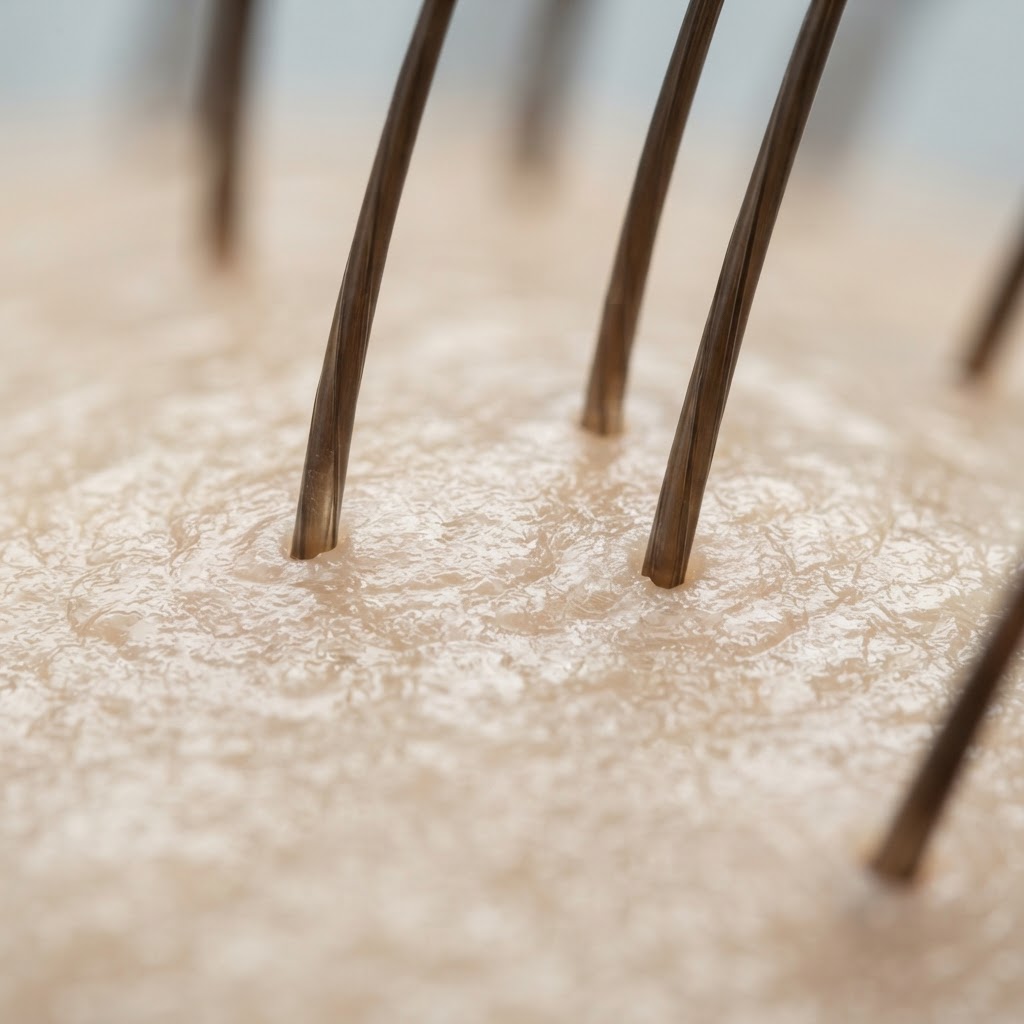
The Baseline
Balanced Scalp
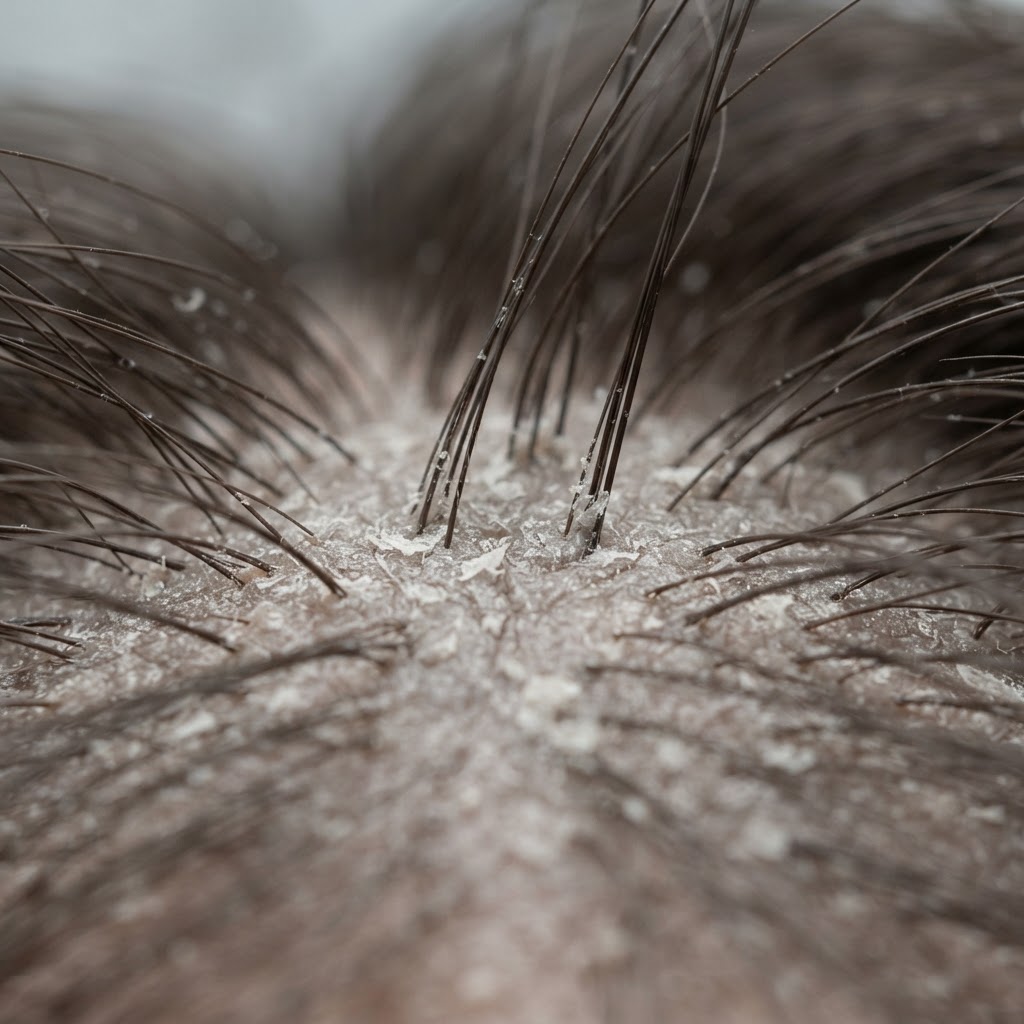
Low Sebum · Barrier Lipids
Dry-Appearing Scalp
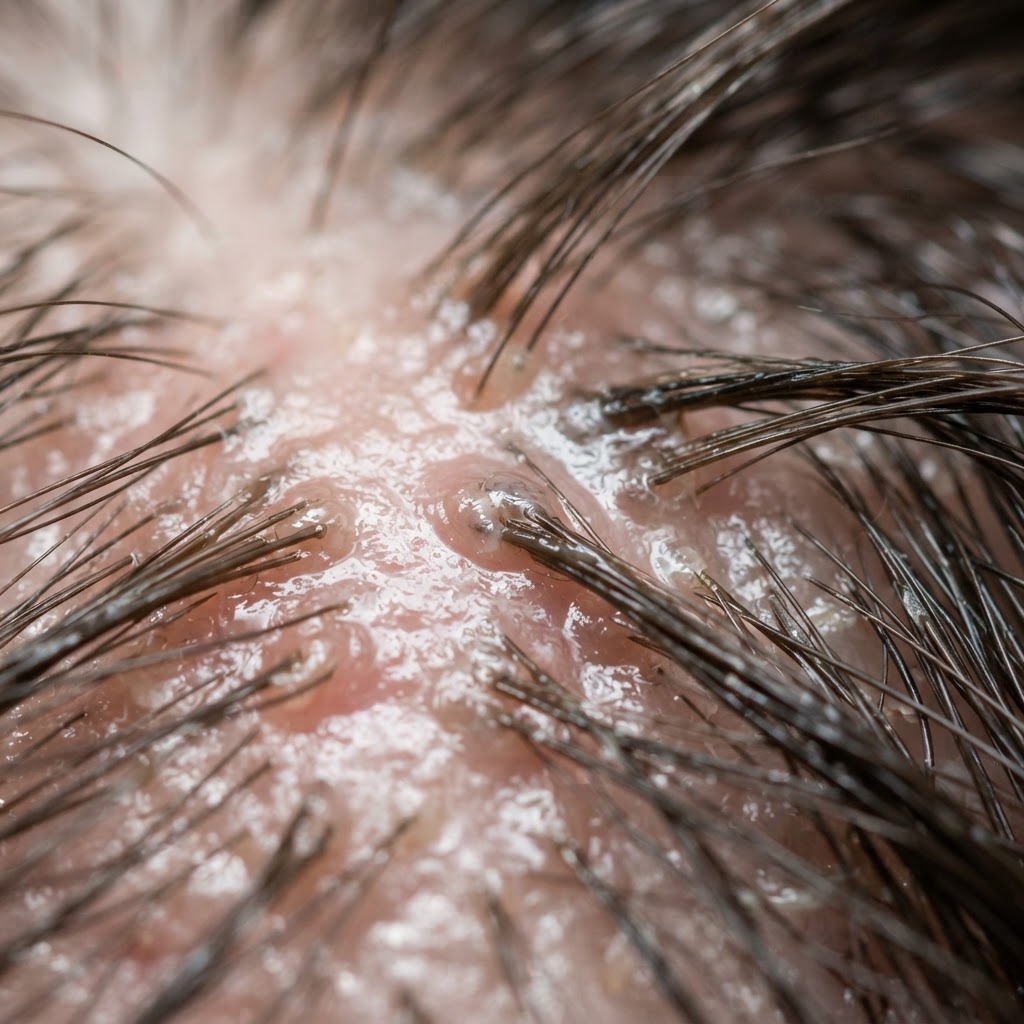
Sebaceous Gland Activity
Oily-Appearing Scalp
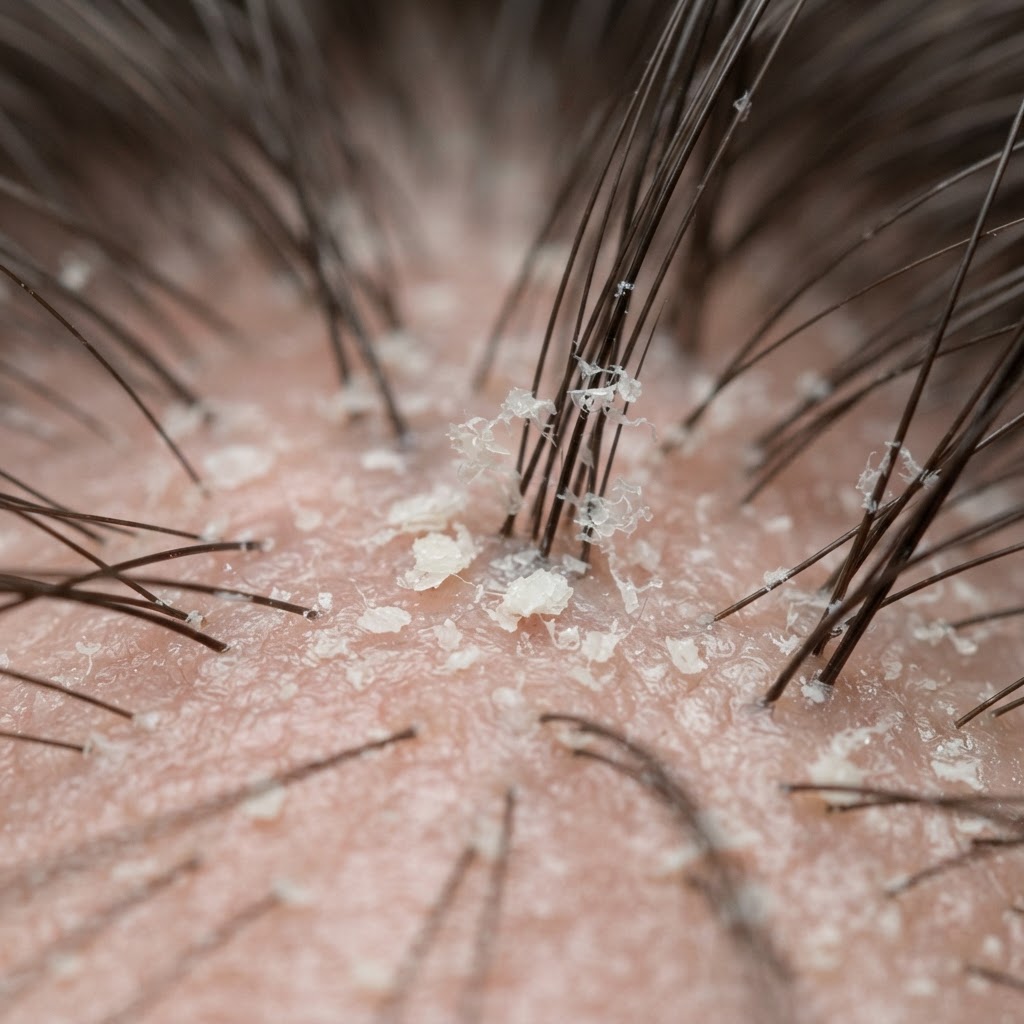
Keratinocyte Turnover
Visible Flaking
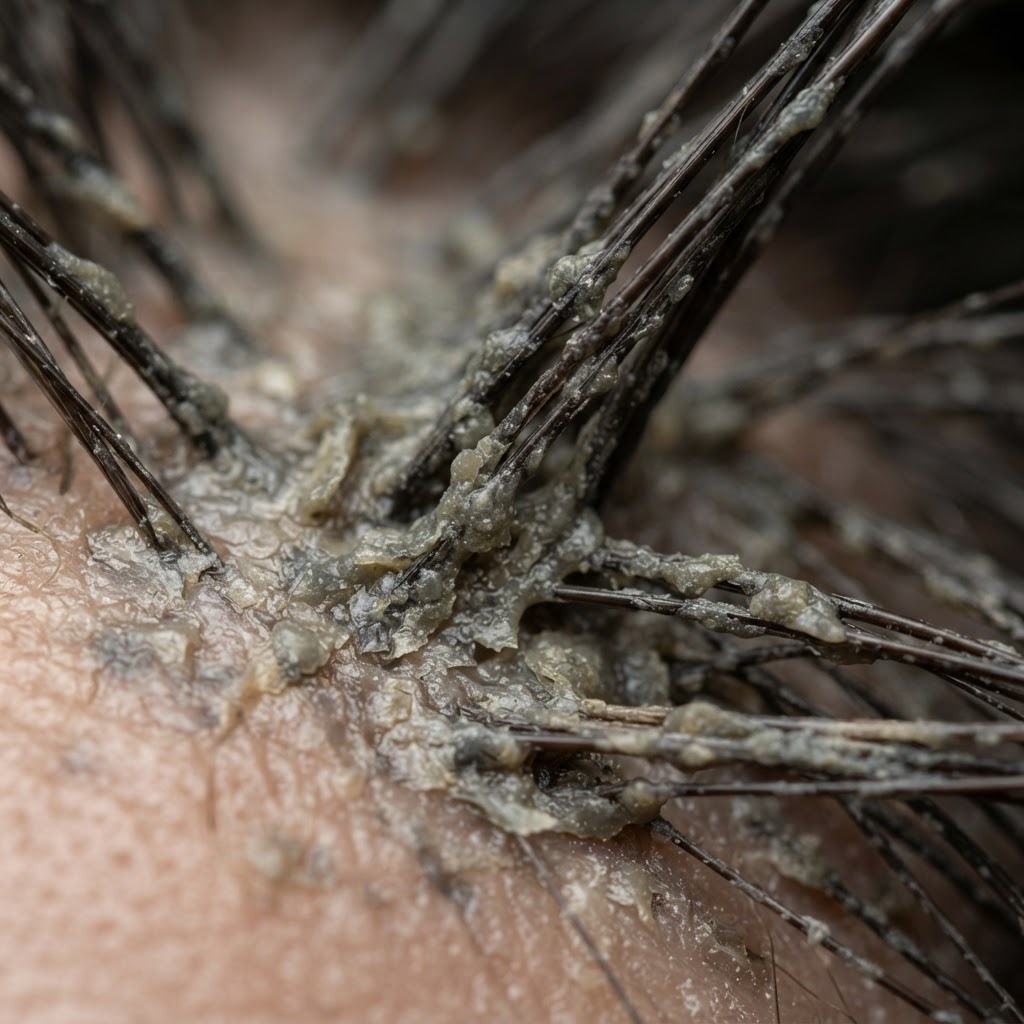
Deposition Chemistry
Product Buildup
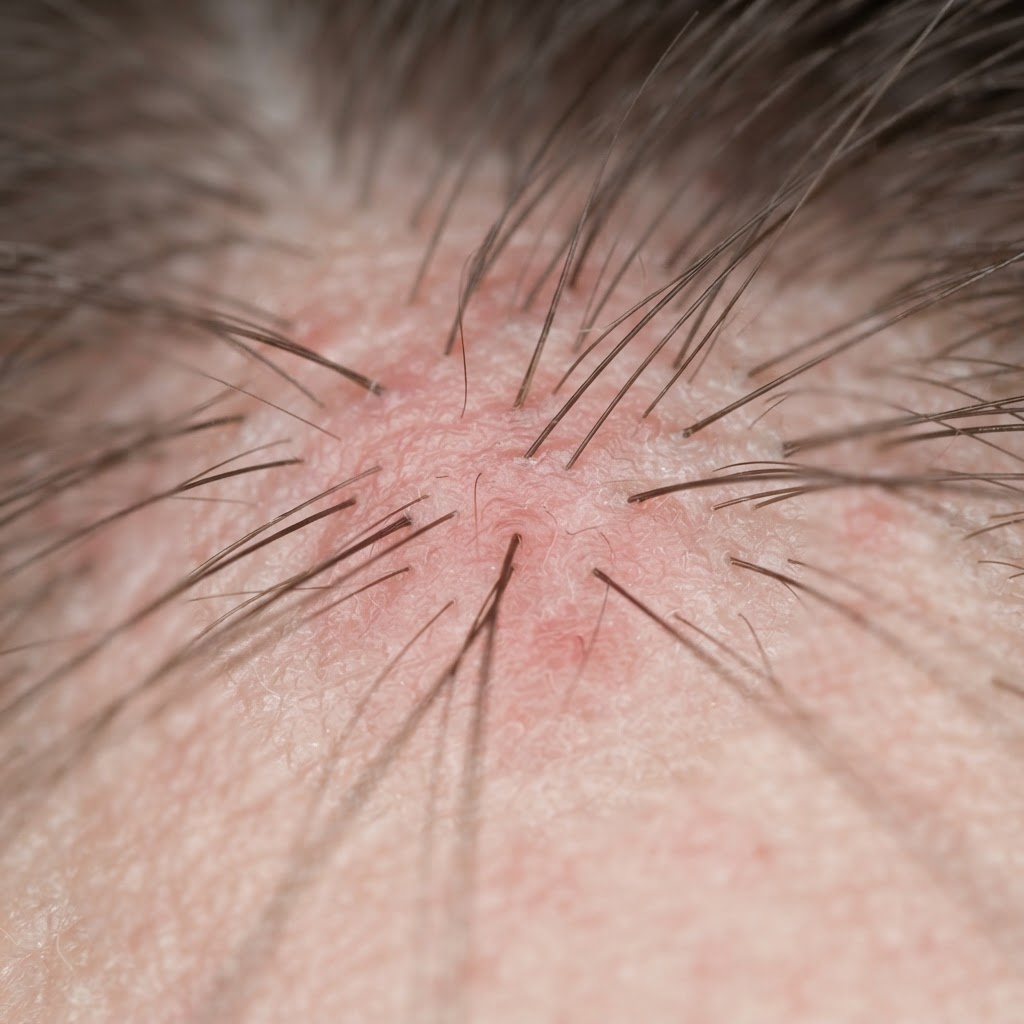
Surface Reactivity
Sensitive-Appearing Scalp
Check Your Understanding
0 of 3 answered
1. Where does scalp hydration primarily come from?
2. Signs of a thirsty scalp include…
3. Why can heavy products on the scalp backfire?
Related Science
Related Ingredients
Complete This Lesson First
Work through each step — this lesson unlocks once they're all checked off.
3 steps to go
Create a free account to track your progress and earn a certificate when you finish this track.
Continue to Next Lesson
2.3 · Scalp Care for Protective-Style Wearers
🔒 Complete every step of this lesson above to unlock the next lesson.